Henry Percy
Wolf HallHenry Percy is the Earl of Northumberland’s heir whose attachment to Anne Boleyn becomes entangled in a dynastic marriage arranged by Thomas Wolsey and approved by Henry VIII. First presented as a young man who believes that a witnessed pledge binds him to Anne, Percy later protests that she is rightfully his wife and refuses to accept his marriage to Mary Talbot as settled. His story traces the collision between private attachment and the political management of noble lineages—and exposes the financial power that can enforce the court’s preferred account of a marriage.
Identity and Dynastic Position
Percy is introduced as the heir to the Earl of Northumberland, a family whose position carries strategic responsibility for the north. Wolsey argues that Percy’s future is not simply his own: he will one day be expected to help hold the region, and his marriage is therefore a matter of political arrangement. The cardinal has already matched him with Mary Talbot, daughter of the Earl of Shrewsbury, and says the king has agreed to the match.
That expectation puts Percy at the center of a conflict between hereditary status and personal choice. He believes he is free to choose his wife; Wolsey insists that a future earl must understand his place and accept a match made for him. Percy’s rank gives him a claim to authority, but it also makes his marriage an instrument of policy, subject to the plans of the king, the cardinal, and his father.
Anne Boleyn and the Broken Pledge
At the time of the dispute, Anne Boleyn has returned to England after growing up at the Burgundian court and in France. She appears at court in 1521, dancing in a yellow dress, and soon attracts Percy’s attention. Rumour links the two, and Wolsey summons Anne’s father, Thomas Boleyn, to demand that he restrain his daughter. Boleyn presents the attachment as youthful and says Anne knows it cannot proceed; Wolsey, however, hears that Percy and Anne may have made pledges before witnesses.
In George Cavendish’s later dramatic reconstruction for Thomas Cromwell, Percy argues that he and Anne have made a contract of matrimony, which he regards as equivalent to a true marriage. Cavendish portrays the young heir as blushing, troubled, and in love, while Wolsey grows angry and threatens to involve the king and Percy’s father. Percy does not prevail. His father comes south, rebukes him, and warns that he could destroy the family’s future if he inherits and brings the noble house to ruin. The father’s threat, the cardinal’s intervention, and the arranged match leave Percy crying and separated from Anne.
Cavendish recalls that Percy was married to Mary Talbot, but that the couple were unhappy. He also recounts Anne’s reported anger at Wolsey: she said that if she could cause the cardinal displeasure, she would. The court had laughed at the threat, treating Anne as a young woman angered by losing the prospect of an earl. In retrospect, Cavendish reads the episode as an early misjudgment of her eventual rise. He further suggests that the king had already taken an interest in Anne, even while he was close to her sister Mary Boleyn; the reason Wolsey’s intervention could not secure the court’s intended outcome becomes part of the story’s larger pattern of royal desire disrupting other people’s plans.
A Later Challenge to the Marriage
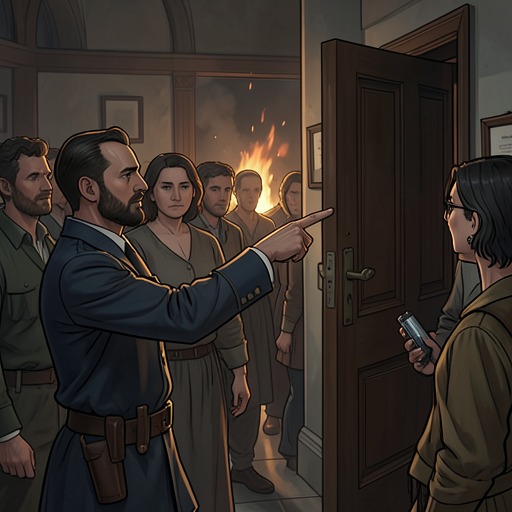
Years later, Percy’s grievance reappears when Thomas Cromwell seeks to persuade him to accept his life with Mary Talbot. Cromwell finds him at an inn among men in Percy livery and first tries a conciliatory approach, asking what can be done to help. Percy answers with anger and grief. He says he could not agree to the marriage on the wedding day and cannot agree to it now; he believes Mary knows he had been pledged to Anne and that his attachment never changed.
Percy insists that he had told the truth about a compact made before witnesses and had sworn to it, but that Wolsey bullied him out of his claim and his father threatened to remove him from the family line. With his father now dead, he says he is no longer afraid to speak openly. He frames his complaint as a question of conscience and unequal treatment: Henry VIII publicly challenges his own marriage, while Percy is pressured to return to a marriage he believes invalid. He claims Anne Boleyn is rightfully his wife and invokes the judgment he believes awaits the king before God.
Cromwell answers not by accepting Percy’s interpretation but by asserting that Percy was never pre-contracted to Anne and that any promises he made had no legal effect. He also warns Percy that further public claims about Anne’s freedom will bring the Boleyn and Howard families against him. Finally, he tells Percy that Anne does not love him and that the service he can now do her is to retract his statements and take any oath required to clear her path to become Queen of England. Percy’s protest is thus contained through a combination of legal assertion, family pressure, and a demand for public compliance.
Credit, Power, and Consequences
Cromwell’s leverage over Percy is financial as well as political. He tells Percy that he knows how extensively the earl has borrowed across Europe and can have his creditors call in their debts. Percy objects that bankers have no armies, but Cromwell counters that Percy cannot maintain forces without money. His title carries an obligation to secure the north: tenants need supplies, weapons, and fortified places in good repair. If Percy cannot provide them, Cromwell warns, the king can take his title, lands, and castles and give them to someone capable of doing the work.
The exchange makes Percy’s vulnerability concrete. He imagines power residing in his title and inherited rights; Cromwell describes a system in which decisions made in counting houses and supported by promissory notes can determine whether armies are equipped and estates maintained. In Cromwell’s account, credit reaches across Antwerp, Florence, and Lisbon, connecting distant markets to the practical capacity of a northern earl. Percy’s military and hereditary standing cannot protect him if his resources fail.
Cromwell uses that pressure to make his warning personal, imagining Percy without money or title and urging him to take the oath that would clear Anne’s path. Percy slumps over the table, and angry tears spring to his eyes. Cromwell then restores a gentler manner and tells his companions that he feels sorry for him. The moment does not resolve Percy’s old attachment; it shows how little room remains for it to alter the political arrangement.
Narrative Role and Significance
Percy’s story returns in two contrasting forms: Cavendish’s recollection of the young heir’s failed appeal to Wolsey, and the later scene in which Cromwell confronts him as a married earl. The first presents a young man trying to defend a pledge against an arranged match; the second shows the same claim resurfacing after the court’s political circumstances have changed. Together, the episodes make Percy’s remembered promise an enduring counter-narrative to the official treatment of his marriage.
His predicament also provides a pointed contrast to Henry VIII’s challenge to his own marriage. Percy asks why the king may invoke conscience over his marital bond while Percy is denied the same freedom to act on his understanding of a pledge. The narrative does not grant Percy power to determine the law or the succession. Instead, his protest exposes how the language of conscience, contract, and legitimacy is applied within unequal structures of rank and royal authority. His eventual confrontation with Cromwell makes the imbalance unmistakable: Percy has noble blood and an earldom, but the court can use law, kinship, and credit to insist on a different future.